Suggestions and guides
Glass

The peculiarities of glass
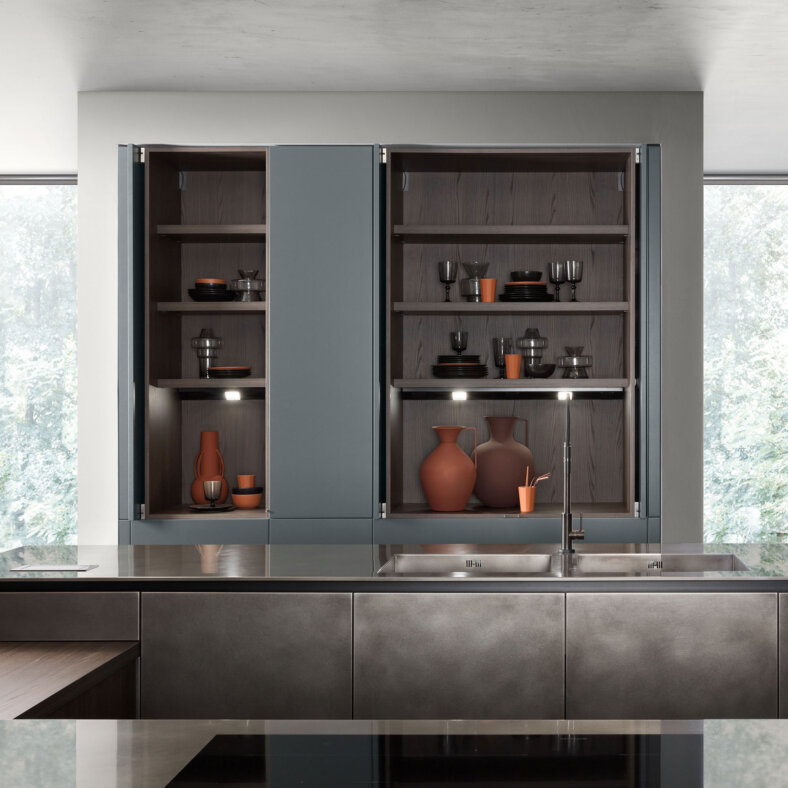
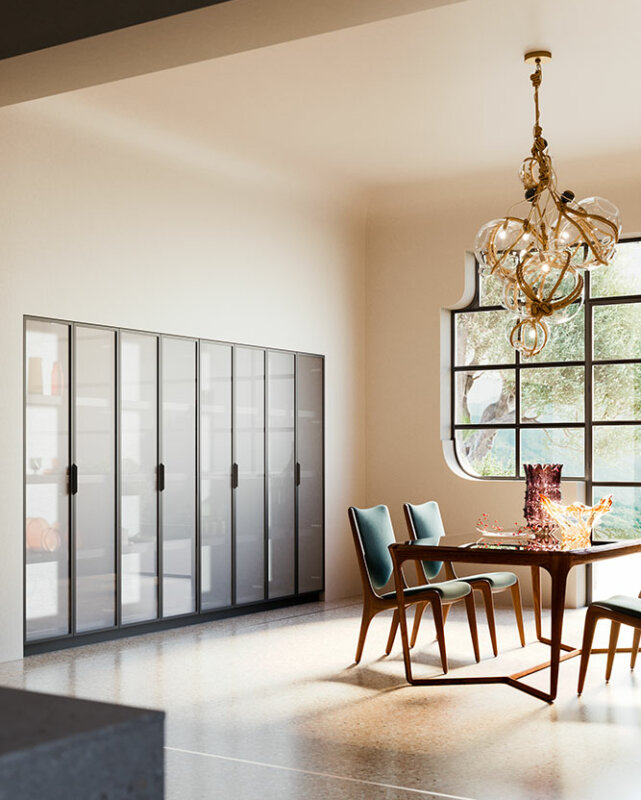
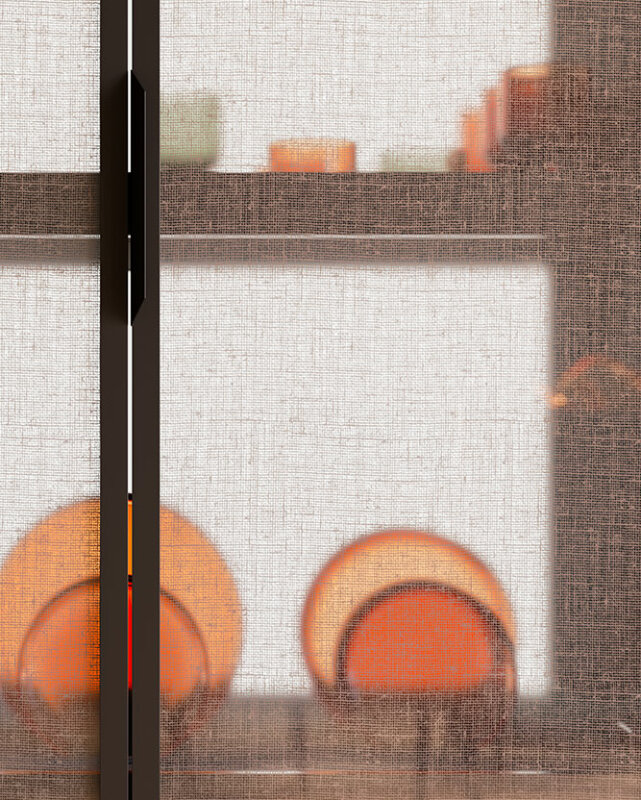
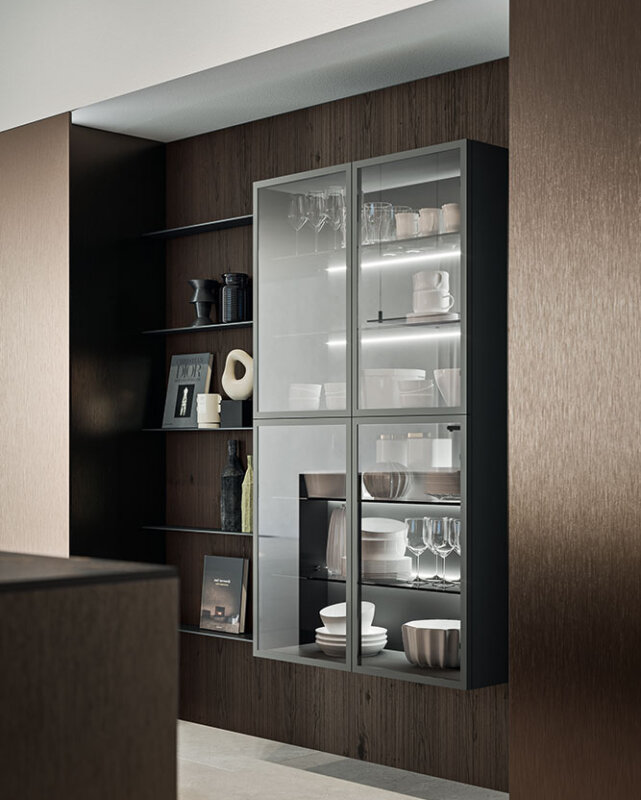
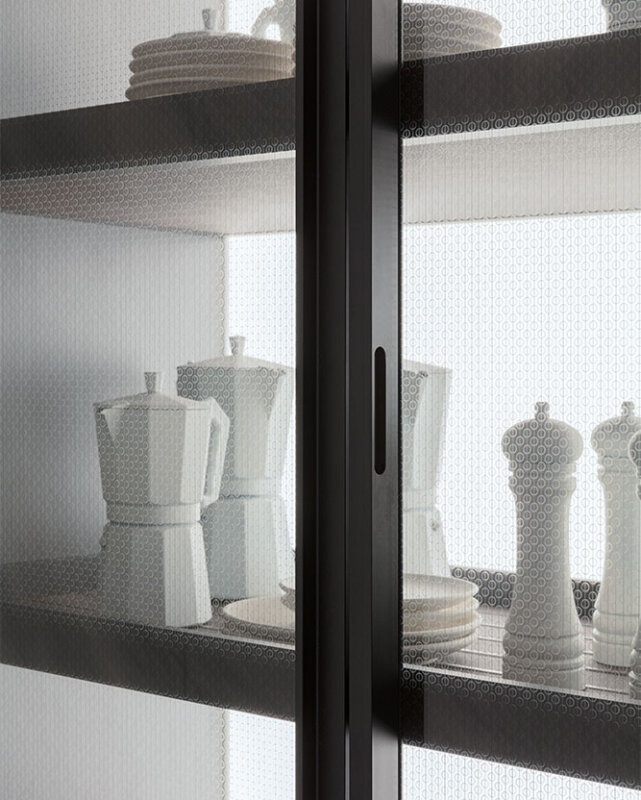
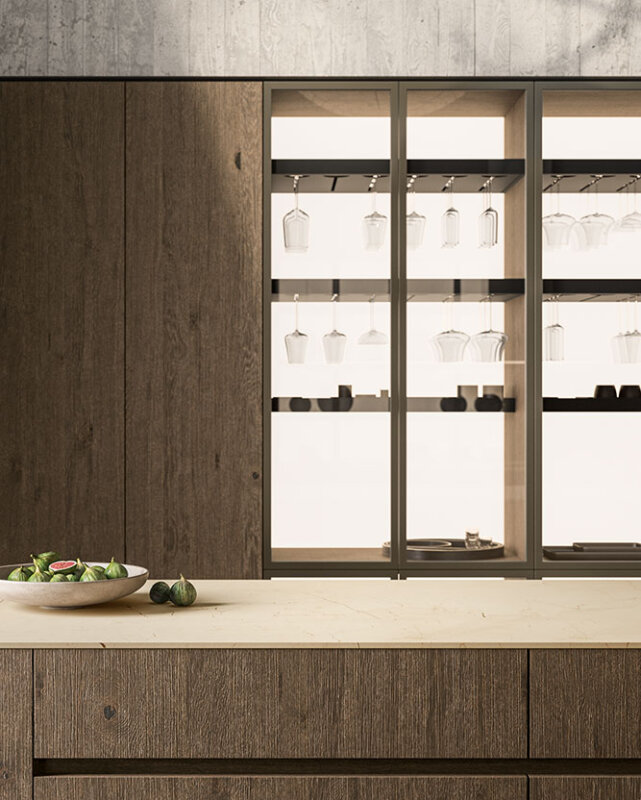
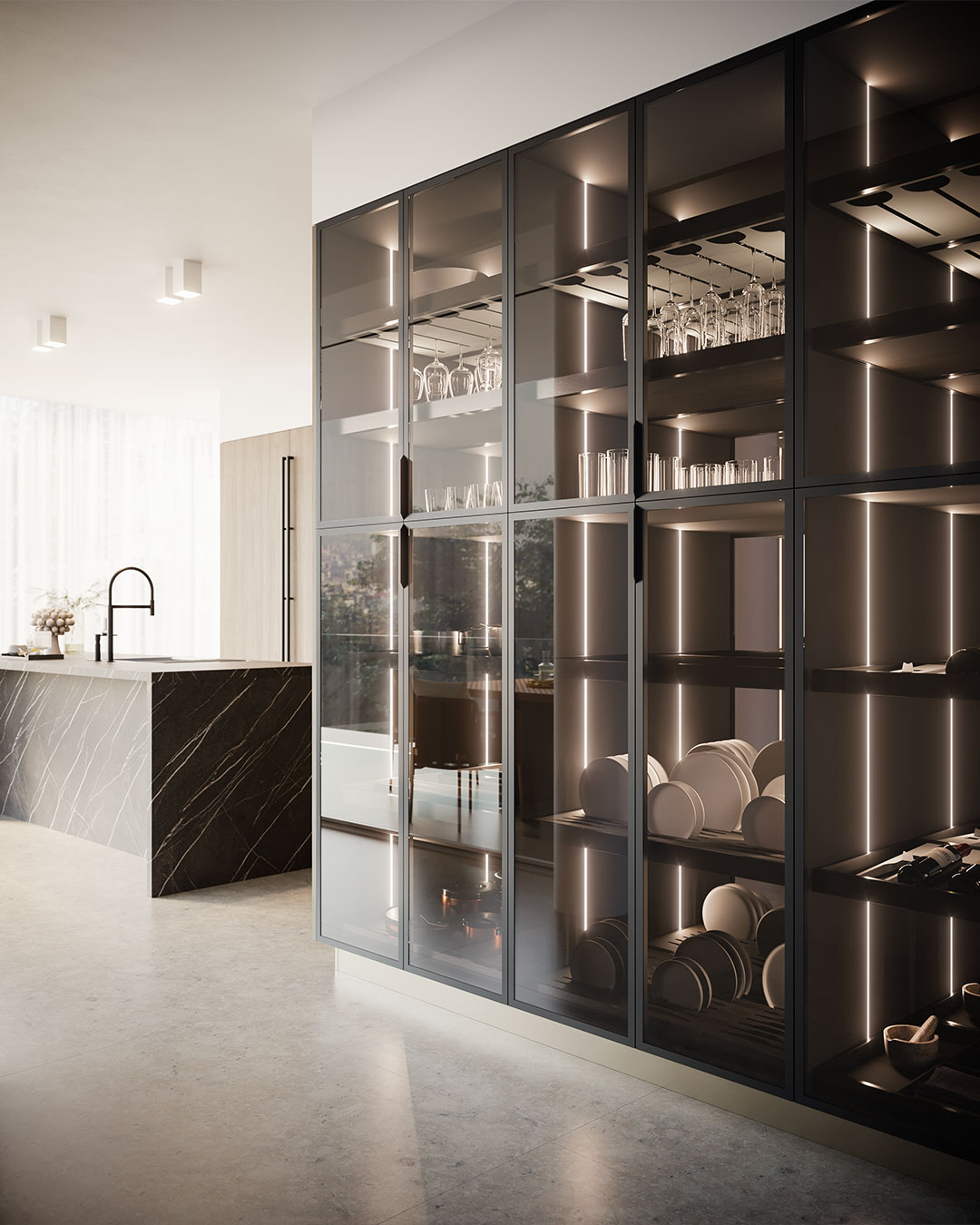
Glass doors are an ideal match to lighten up more impactful materials, or they can be used as display cabinets on wall units and tall units with different solutions: transparent bronzed, grey satin, gauzed or MVi glass.
What types of glass can be used in the kitchen?
Glass is the result of the fusion of different natural substances, primarily silicon dioxide. To ensure that it is perfectly safe for use in the kitchen, it is subjected to a secondary treatment at extremely high temperatures. This process transforms it into resistant and elastic tempered glass that absorbs to impacts and, in the event it breaks, shatters it into a myriad of small and harmless fragments that remain attached to the front for increased safety. All edges are ground, smoothed and polished.
Characteristics of glass
Glass used in the kitchen introduces a strong aesthetic that responds to a range of different styles, from elegant to minimalist to decorated, with polished or matt (acid-etched) finishes. What is more, glass is recyclable and environmentally friendly. In terms of day to day management, it offers protection against liquids, which is does not absorb, and ensures:
- guaranteed hygiene because it is non-porous
- high resistance to scratching
- optimum resistance to stains
- optimum resistance to heat
- impermeabillity to liquids
- elevated resistance to deterioration
Glass kitchen doors
Glass kitchen doors are always fixed to a frame, either exposed of concealed. Doimo Cucine, for example, offers versions in exposed perimeter frames in aluminium or fixed using an adhesive sealant to concealed aluminium frames. The thickness of the doors can vary from 20 mm, for D20 and Aspen, to 23 mm for D23 and Aspen. The glass finish also varies: from gauzed glass to transparent bronzed glass, from grey satin glass to Supersilver and finally MVi. The glass panels are also commonly used to create shelving inside the cabinetry.
How to clean a glass kitchen
To clean exposed glass surfaces in the kitchen, use a soft cloth and a detergent created specifically for glass, followed by a thorough rinse, or use a slightly damp and tepid micro fibre cloth. In all cases make to carefully dry all surfaces. Remember that painted glass elements, in other words the non-visible interiors of kitchen fronts, can only be dusted clean using a micro fibre cloth, and never treated with detergents. To remove eventual stains, dilute ethyl alcohol or domestic ammonia (max. 30%) in water (distilled if possible).
Avoid:
- direct contact with heat from objects such as pots, coffee makers, irons, etc., as glass tends to break
- using kitchen utensils and other objects that may scratch the surface such as : steel wool, abrasive substances and powdered detergents
- using scouring pads, abrasive substances, powder detersives or detergents containing acids, in particular hydrofluoric acid, as well as alcohol, ammonia or products containing acidic or limescale removing substances