Suggestions and guides
Doors
The choice of cabinet fronts
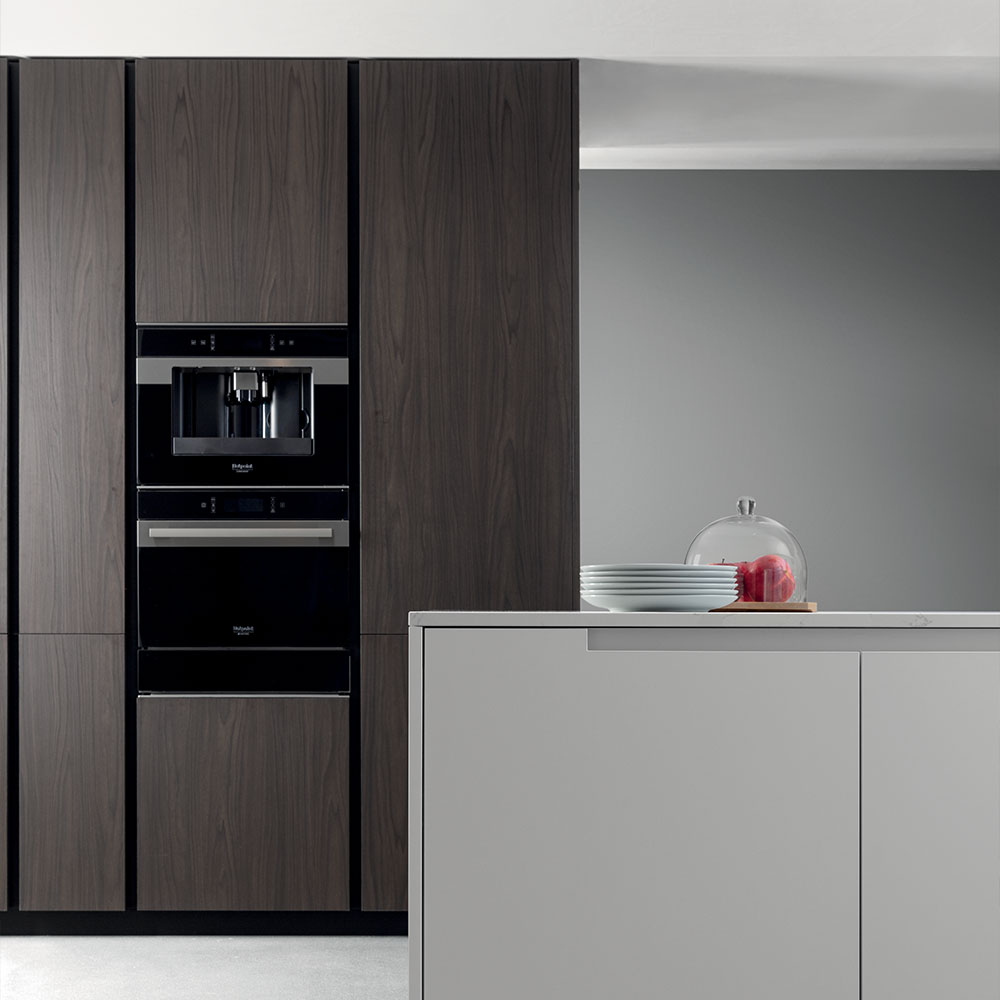
This is why it is important to choose based on personal taste, because they are what we see in the kitchen day after day. Choices must consider technical aspects, tied to easy maintenance and cleaning, resistance and duration over time, in particular when the cabinet fronts are near a dishwasher, sink or oven which generate heat and humidity.
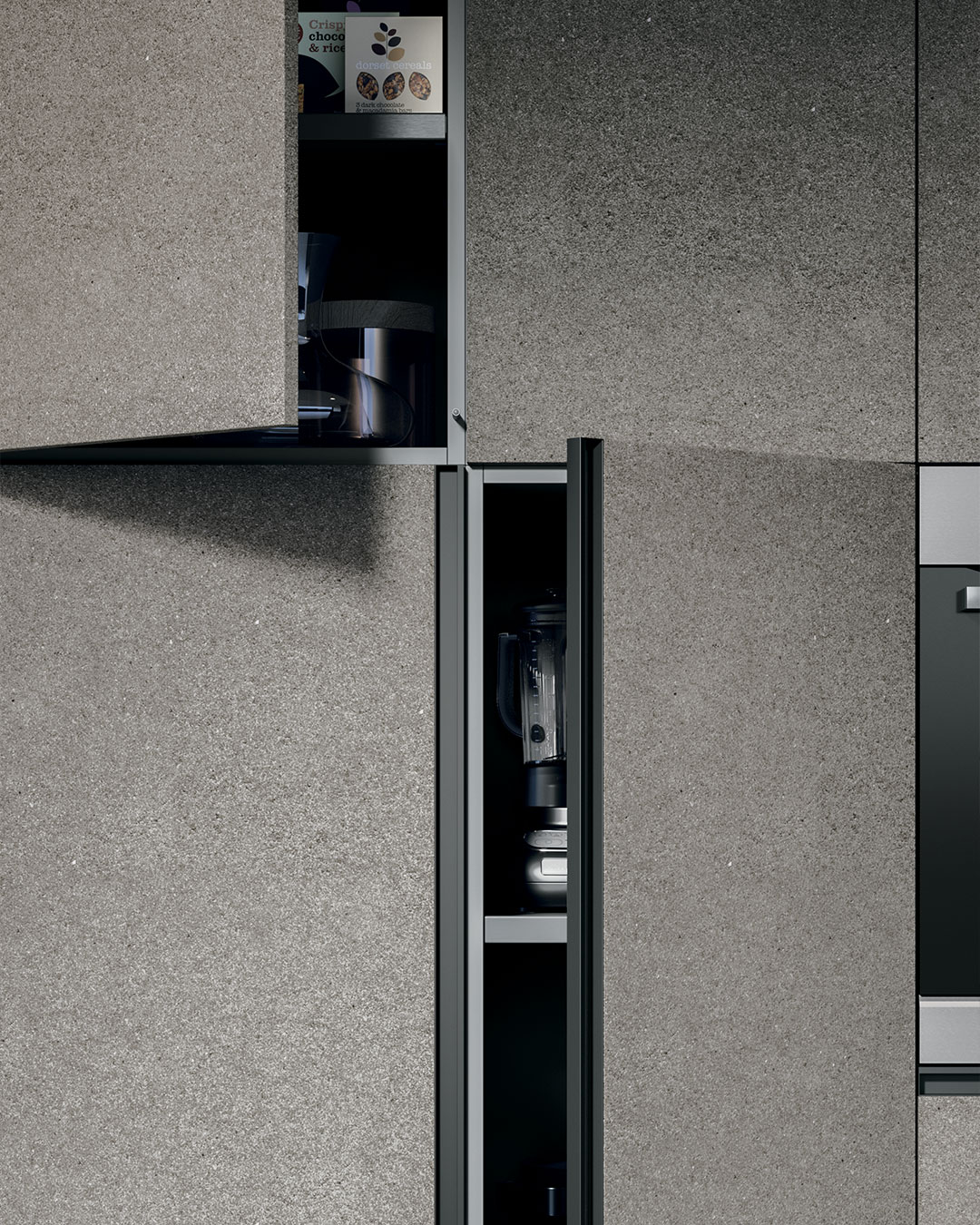
Diverse door typologies, depending on the selected finish and handle system.
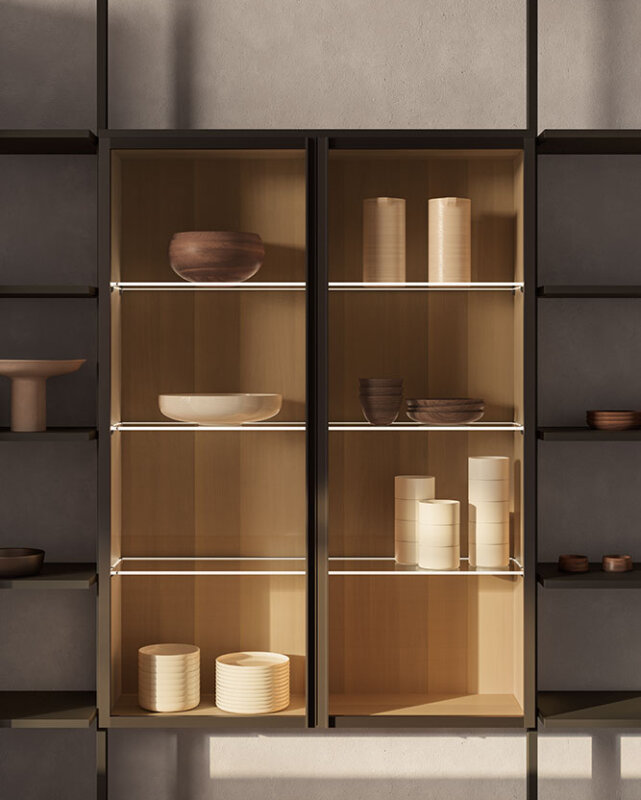
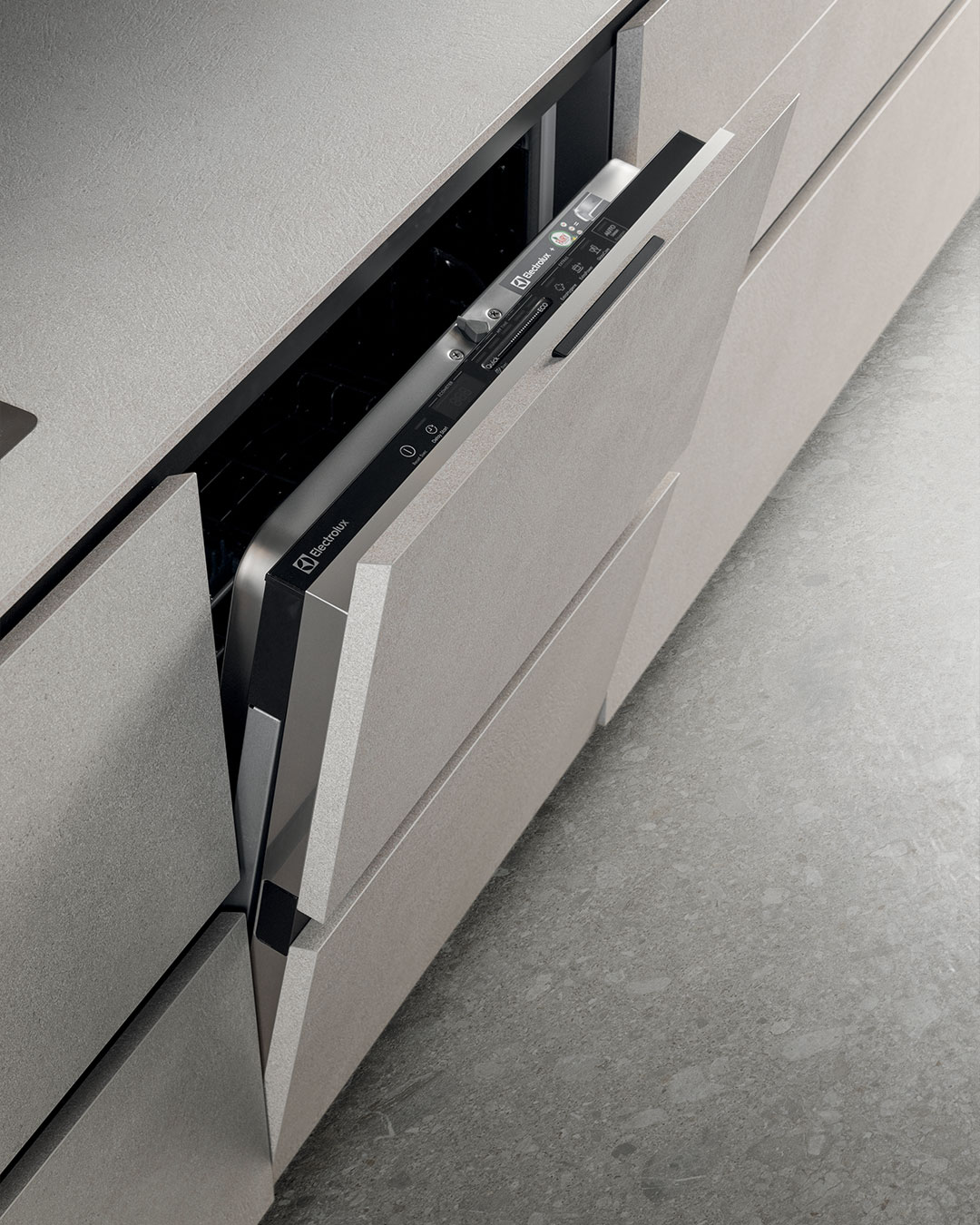
Aluminium internal frame door and applied panels: the aluminium frame is invisible from the front and serves to support exposed panels that resemble slab doors. Finishes include wood, lacquered glass, ceramic material, MDi, Fenix NTM® and NTA®, HPL and Carbon fiber. The durable, robust and lightweight aluminium structure is resistant to all forms of corrosion and 100% recyclable.
Slab door: the simplest, smoothest, most common and most minimalist cabinet door there is.
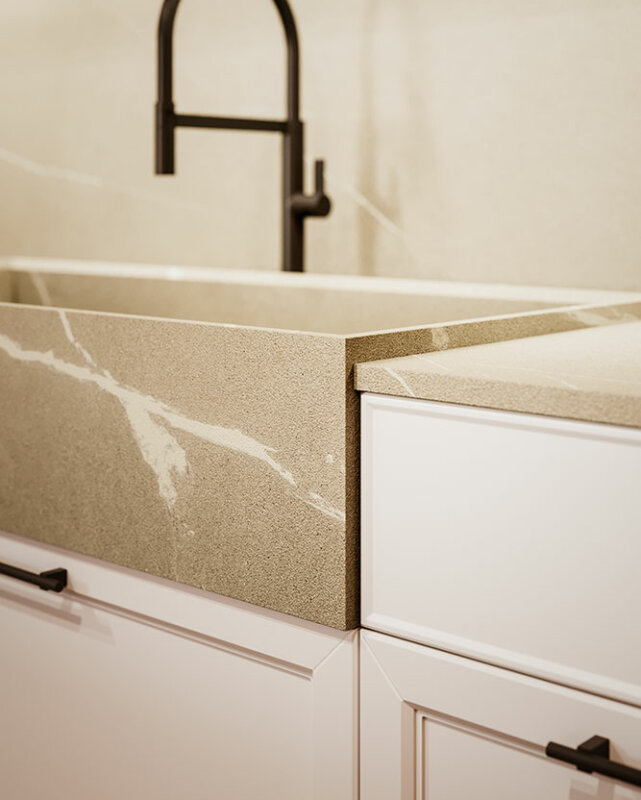
Chamfered door: the top or side handle edge of the door features a 30° chamfer. This why, here at Doimo Cucine, we call it a “30° chamfer door”. There is also a version with an additional 45° cut toward the inner face where the door meets the side of the cabinetry. By applying the same cut to the cabinet frame it is possible to create the effect of a single block with a groove handle that appears to continue on the side panels.
Door with profile: at Doimo Cucine we call it an “L” profile door for the form of the metal profile applied to the top edge of a slab door to make for easy opening, as part of a groove or flat groove system.
Shaped door: what appears to be an original and chameleonic groove handle is, instead, a door with a classical groove handle and chamfered edge.
Integrated handle door: this door features a handle made from an extruded profile. It is integrated into the top edge of the door and fitted with end caps. At Doimo Cucine we call it a “Rail handle door”.
Raised edge door: an elegant door with the most subtle frame marking the edge.
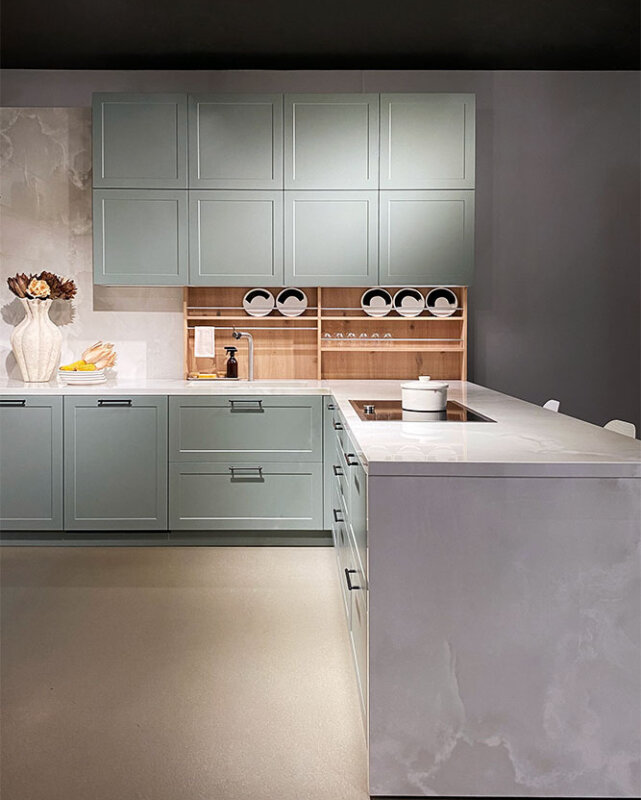
Framed door: characterised by a frame around the edge of a centre panel, it is prefect for traditional kitchens but also knows how to take on a contemporary look when treated with style.
Quadra door: made with a MDF (Medium Density Fibreboard) panel, with minimum Formaldehyde emission.
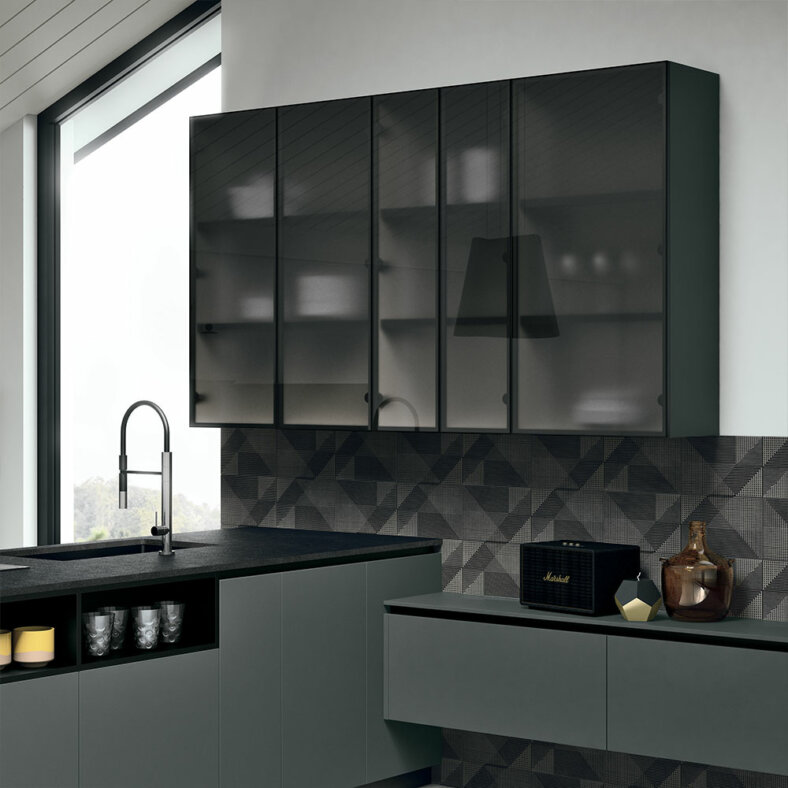
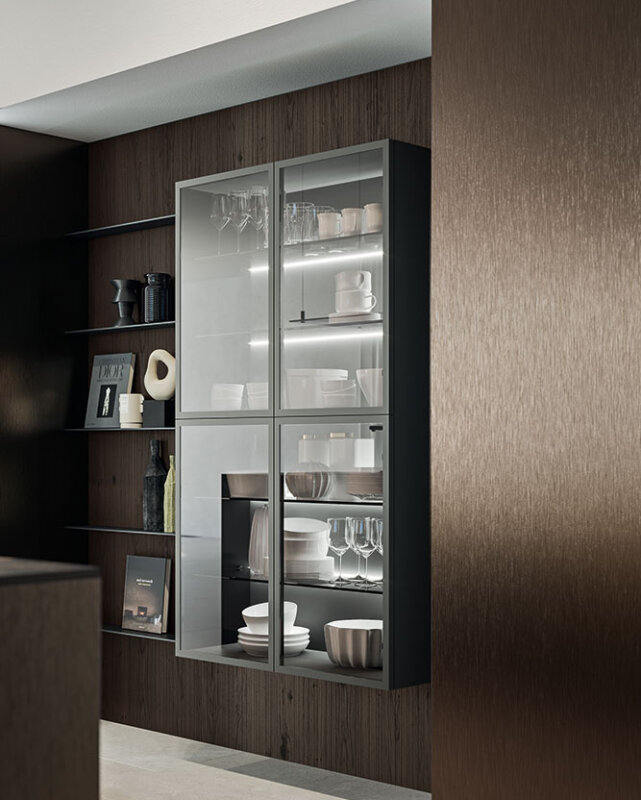
Aluminium frame glass door: the frame is available in black metal, sometimes more pronounced and at other times almost invisible, paired with bronze-tinted, acid-etched, fabric-effect, Supersilver or MVi glass. The Hide door frame features an elegant concealed hinge and an integrated handle. In general, this door type is only suited to certain applications and dimensions, and is therefore always combined with at least one other door type.
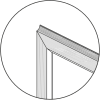 Aluminium internal frame door
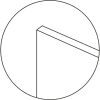 Slab door
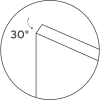 30° chamfer door
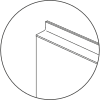 Door with "L" profile
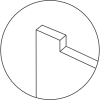 Shaped door
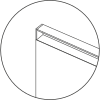 Integrated Rail handle door
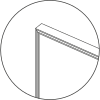 Raised-edge door
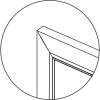 Framed door
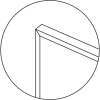 Metal framed glass door
 QUADRA DOOR
Door dimensions
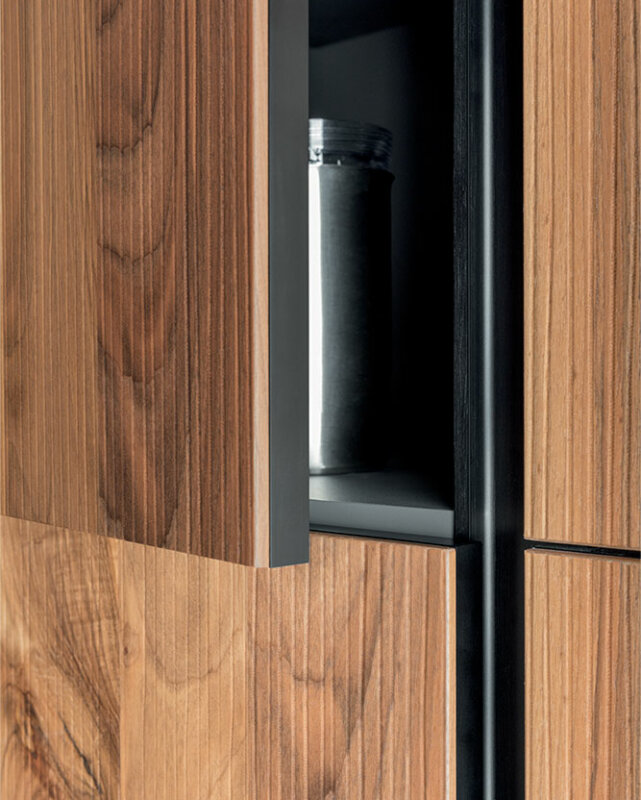
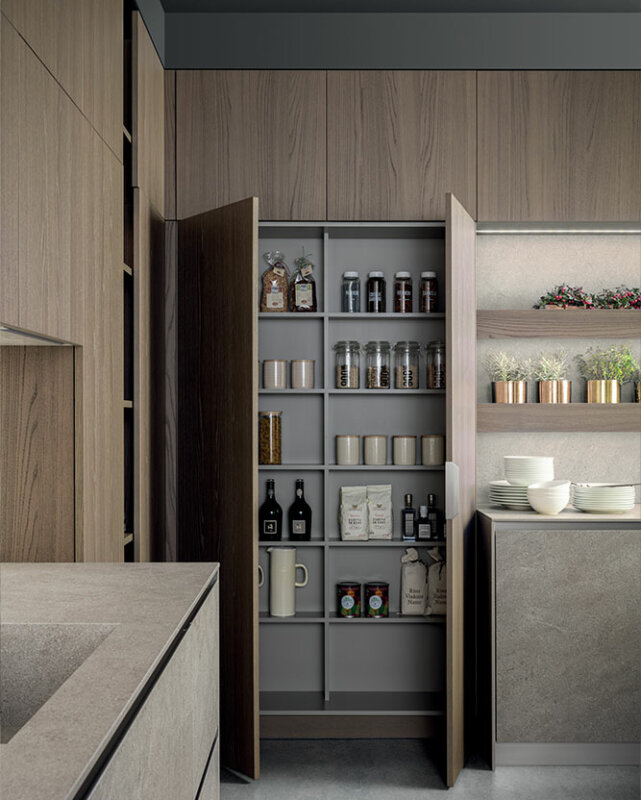
Cabinet fronts are available in a vast range of dimensions: from 15 to 120 cm in width, and from 24 cm for low base cabinets to 240 cm for one-piece tall cabinets. Panel thicknesses range from an average of 2 cm to 2.3 cm, as well as other more technical solutions with 1.4 cm thick panels.
Door materials
Laquer
Highly appreciated for its very broad range of colours and availability in gloss, matt, metallic and satin finishes, as well as in the more durable excimer lacquer version. Easy to clean.
EvoSilk
An evolution of the lacquered finish, characterised by an exceptionally silky feel and a highly compact, visually matt surface that is therefore less delicate. This effect is achieved through the use of ultraviolet (UV) laser light technology.
Tecnolam/Synchroface
Particleboard panels, finished on two sides with decorative paper impregnated with melamine resin depicting solid colours, woods, or a range of different patterns. The most economical choice. Synchroface represents an evolution with even more realistic textures.
Stratificato HPL
It is composed of different layers of coloured paper impregnated with high pressure heat-laminating resins, pressed between two external layers that closely imitate solid colours, woods, stones or ceramic.
Wood
Wood veneer finishes always bring a timeless warmth to the kitchen, in a very broad range of finishes.
Fenix NTM®
This elegant material is soft to the touch and highly practical: anti-fingerprint, resistant to water, abrasion, rubbing and solvents. Metallic finishes are offered in Fenix NTA®.
Glass
Glass doors are mounted on an aluminium frame. Tempered to ensure safety in the event they crack, they are easy to clean and available in transparent bronzed, acid etched, gauzed, Supersilver or MVi finishes.
Stainless Steel
Extremely hygienic, more prone to scratching. Doimo Cucine also offers a vintage version with an aged look, and mirror and etched mirror finish.
Peltrox®
All the advantages of stainless steel coupled with the warmth and aesthetic of pewter, which remain stable over time, at a very advantageous price.
XGloss and XMatt
Made from PET, a PVC free plastic material with zero emissions into the environment, made resistant by nanotechnologies. More than green, they are also hygienic and economical.
Piramid
A recyclable material that is resistant to stains, scratches and corrosion. It is highly luminous thanks to a special metal sheet covering its surface, featuring countless tiny pyramids that refract incoming light.
Gres
A 100% ecological material made from natural raw materials (clays and highly selected and refined minerals), baked at such high temperatures they become inseparable and extremely resistant.
MDi
Its name stands for “Mineral Design Innovation”. It is ecological, resistant and available in large format and thin sheets. Its surface is soft to the touch.
Carbon Fibre
This composite material made of carbon fibre is exceptionally lightweight. It is processed at high temperatures to provide the structure with outstanding strength comparable to metal and provides excellent long-term durability.